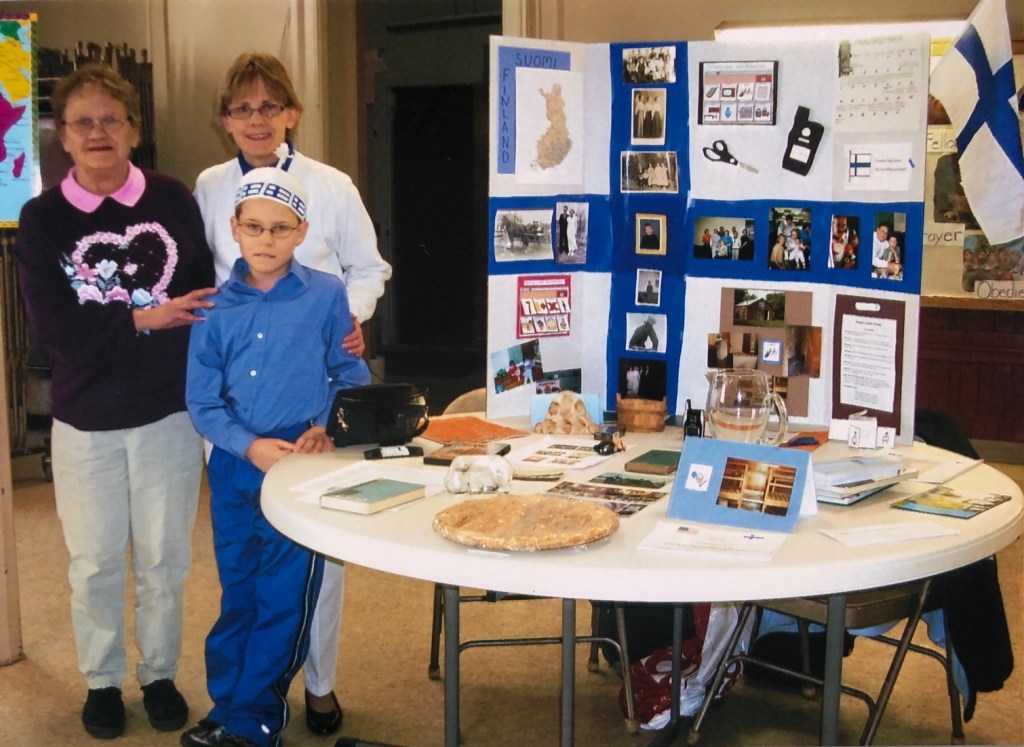
Did you know that your child’s first pair of scissors probably came from a company that was established in 1649? The company, Fiskars, started as an iron-works forging operation in the small village of Fiskars, Finland. We learned this when we participated in our homeschool co-op’s Geography and Heritage Fair. Researching our genealogy and studying our Finnish heritage taught us not only the history of our family, but also Finland’s history and culture.
Learning can include memorization of maps and dates, which are solid foundations to know, but geography and history include so much more. Including STEAM areas of study will help students make connections, spark curiosity, and retain knowledge. More importantly, including older family members in the process is priceless. My daughter interviewed my mother, asking about childhood games, what life was like where she grew up, and what she knew about her grandparents. Once your children know at least one country their ancestors came from and when family members left their homeland, you can begin to explore more about that country and time frame. If your child is interested in science, learn together what technological inventions, such as the Nokia cell phone, or medical breakthroughs originated there and when they occurred. Then assemble a timeline with pictures or drawings “anchored” by dates and locations. For younger students, create a timeline that starts with the year they were born. The top can represent U.S. or world events, while the bottom represents the child’s or family’s special life events each year. Or start with the year they were born and work backwards through history.
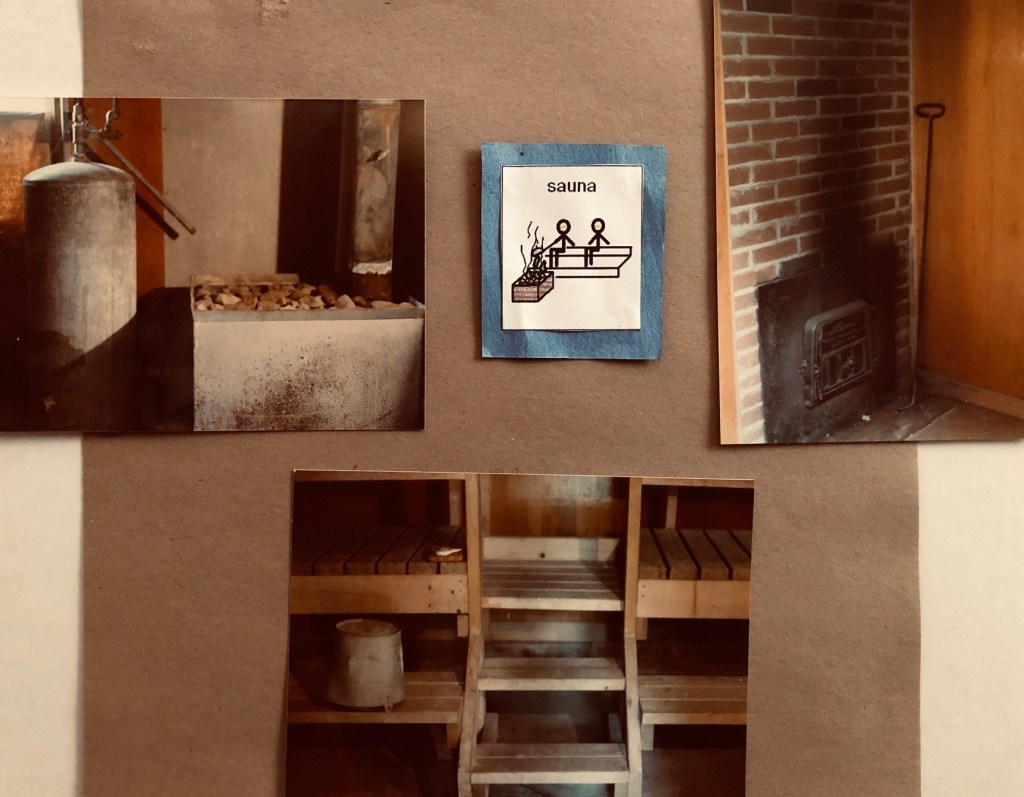
Architecture in other countries can be studied to learn more about history, the tools that were available, the ingenuity of the people and what was important to them. For example, churches built from stone might reveal the early importance of faith; ornate railway stations reveal advancements in transportation and yet the need for beauty around us; and the ever-culturally important to the Finnish people: hewn-log saunas (pronounced SOWnas, not sawnas). Art and music reveal even more about culture and history. Our study taught us about the Kalevala, the 19th-century Finnish national epic that originates from oral folklore, and inspired J.R.R. Tolkien’s legendarium. We learned that Finlandia, composed by Jean Sibelius, was an important symphonic hymn that heightened nationalism during the time Finland fought for its independence from Russia early in the 20th century. I’ll bet as you read this you are making connections! Imagine what connections will occur as your family learns about their own cultural heritage while studying geography and history.
Math is needed to figure out how many generations, centuries, or decades ago someone lived or something occurred. We traced 300 years back from the year my son was born to the farthest year back in time of a known relative – that’s three centuries! Tracing each family member up one branch at a time of the family tree, we went back nine generations. For a biblical analogy, Matthew 1:17 provides the genealogy of Jesus. I counted 14+14+14 = 42 generations! If your child is old enough, ask them to figure out how many years/centuries/millennia that might be.
Once your family has done their research, created projects, timelines, display boards, cooked recipes, made traditional clothing, traveled, taken photos, or whatever you’ve created and gathered, share it with others! A geography and history fair is a wonderful way for your children to gain practical experience in presenting research and facts in a fun way to their peers. It’s also an excellent way to gain confidence in public speaking.
Geography and history come alive when you place your family in the midst of it. But what if you don’t know your family history? Contact me to receive “7 Fun Ideas to Get Started.” The combined study of history, geography and one’s own genealogy and heritage can also provide significant grounding – knowing who we are and where we came from – even if there are things in our history for which we are not proud. Some may not be able to trace their history to learn these things. But for either group, knowing who we are in Christ (Romans 8:1) is even more significant. Thankfully, God, in His infinite wisdom and His word recorded centuries ago, made sure we would know Whose we are; Psalm 102:18, “This shall be written for the generation to come: and the people which shall be created shall praise the LORD.”
This article first appeared in the Fall 2023 edition of The Old Schoolhouse Magazine.  Karen Warfle